

The Real Question Builders Are Asking
Old concrete slabs are everywhere across Perth. Driveways, shed pads, patios. They crack, tilt, break down or look tired long before they lose structural strength underneath.
Naturally people ask the same question.
Can you install Rombus over the top of old concrete
The short answer is yes, but only when the existing slab is still structurally sound and meets basic preparation requirements. The Rombus system is flexible, but it still relies on a stable base below.
Here is what you need to know.
When You Can Install Rombus Over Old Concrete
Rombus is a modular flexible pavement that uses one metre by one metre recycled polypropylene grids filled with a high strength 32 MPa concrete mix. The system spreads load, absorbs movement and handles heat far better than a rigid slab.
Because of the modular nature, Rombus can be installed over old concrete if:
The slab is not pumping or shifting
If the old slab rocks, moves under load or is broken into floating sections, it cannot be used as a base. Rombus needs consistent support across the whole surface.
The surface is mostly level
Small dips or shallow cracks are fine. Deep depressions, large holes or missing sections must be repaired or filled so the grid sits flat and supported.
The concrete is still bonded to the subgrade
If the slab has separated from the ground, you will see hollow points, large cracks or movement. That is a sign the base is failing and should be removed.
There is no active moisture or structural breakdown
Soft concrete, surface crumble or major scaling indicates damage that cannot be covered.
If the old slab meets these conditions, Rombus can be installed on top with proper surface preparation.
How to Prep an Existing Slab for Rombus
1. Clean the surface
Remove dust, loose particles, paint, sealers and oils. Rombus grids sit directly on the surface and need clean contact.
2. Repair significant defects
Patch deep cracks, fill holes and grind any proud edges or high spots.
The goal is simple.
The grid must sit flat and supported so the infill concrete cures evenly.
3. Check levels and drainage
Water must not pool beneath the system. If the old slab holds water, create falls or bring in levelling compound.
4. Install the Rombus grids
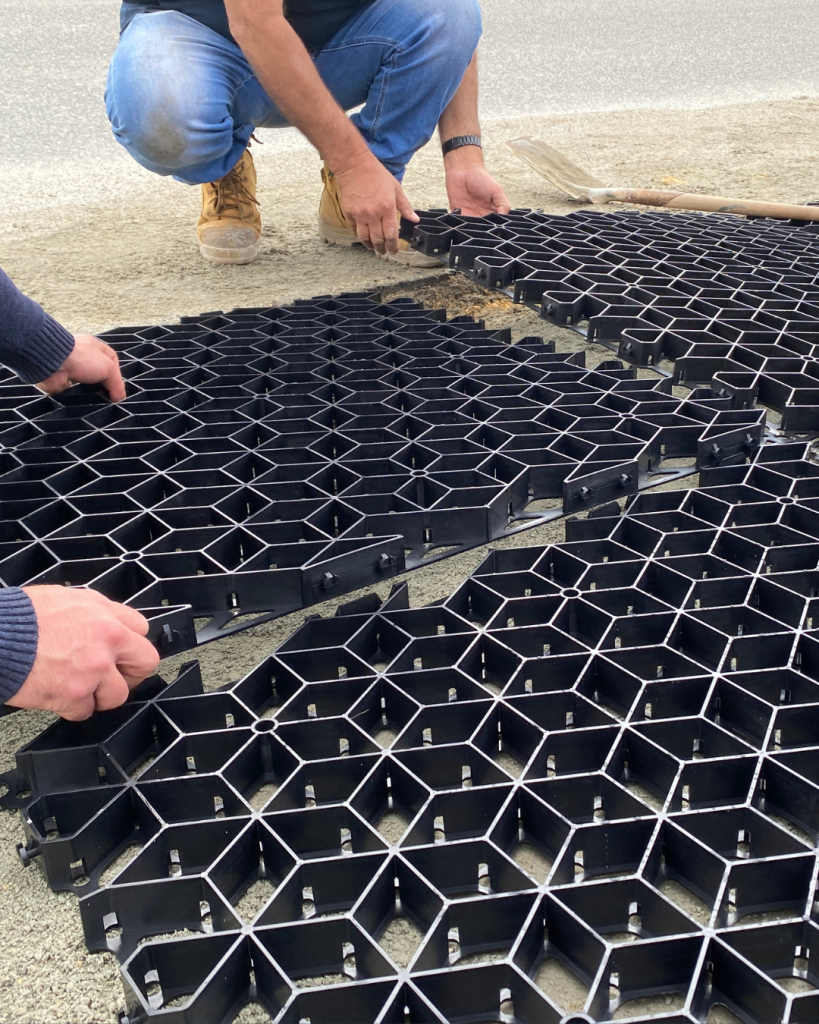
Once the surface is stable, clean and even, the grids are laid out and interlocked.
Each grid is only forty millimetres thick and weighs roughly 5.35 kilograms, so installation is fast and lightweight.
5. Fill with the approved 32 MPa mix
The same Rombus approved concrete mix is used whether the system is installed on soil, road base or an existing slab.
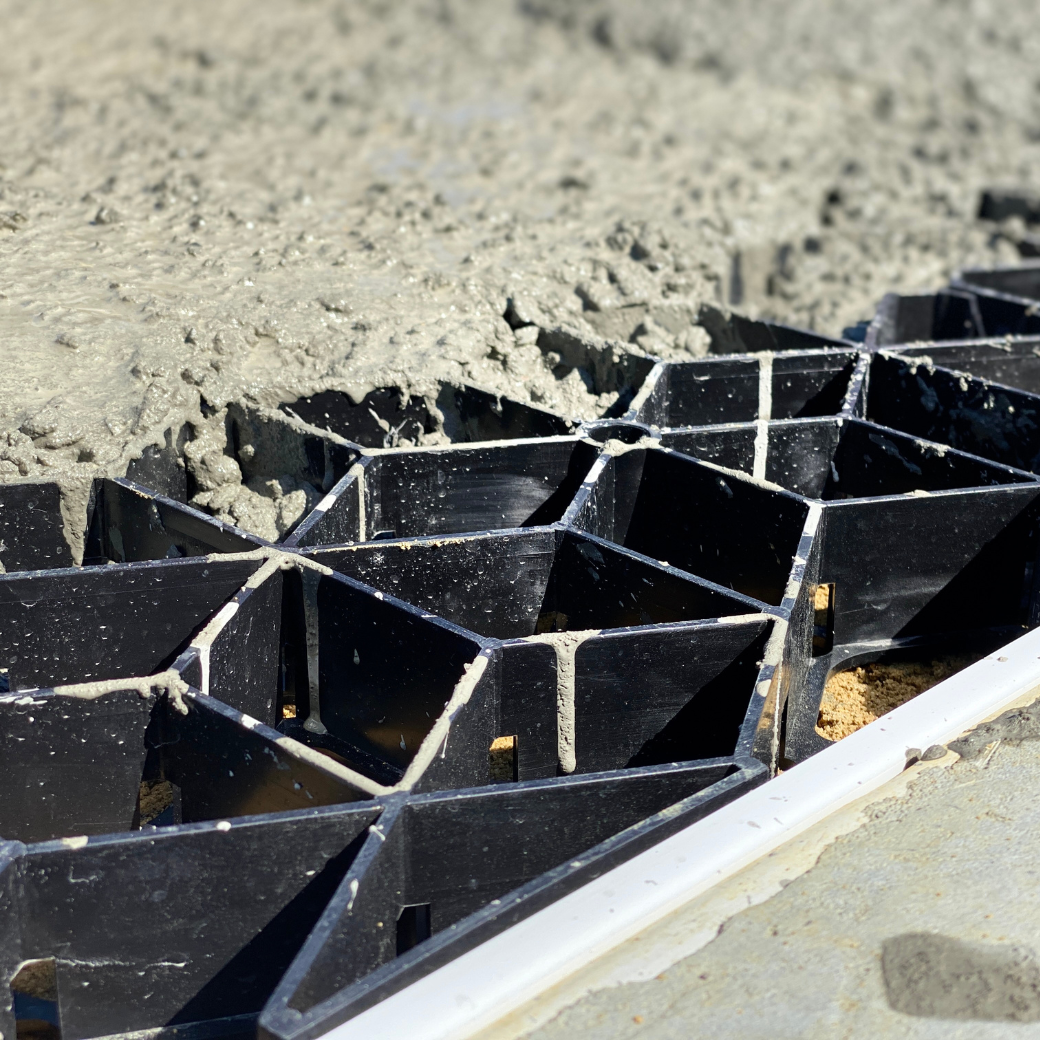
Concrete is poured, vibrated into the cells and finished like a standard slab surface.
When complete, the old concrete becomes a stable substructure and Rombus becomes the new working surface.
Why Cover Old Concrete Instead of Removing It
Less waste
You avoid sending tonnes of concrete to landfill.
Less labour
Old slabs are expensive to demo and dispose of. Rombus turns them into a usable base.
Stronger combined system
The existing slab plus the Rombus grid and 32 MPa infill work together to create a layered flexible pavement that is significantly more resilient than a traditional thick slab.
Built for WA conditions
Rombus is designed to handle heat, shrinkage and ground movement.
Old concrete cannot do that alone. It eventually cracks.
Rombus absorbs movement and spreads stress through the modular grid system which is exactly why it performs in Perth.
When You Should Not Install Over Old Concrete
Be clear about this.
If the old slab is failing, lifting or actively cracking under load, it is not a suitable base. Rombus is flexible, not magic.
The base must be stable.
If you are unsure, a quick inspection or tap test will tell you if the slab is solid or delaminated.
Verified Rombus Specifications
- Grid size 1000 x 1000 x 40 millimetres
- Weight approximately 5.35 kilograms
- Material 96 percent recycled polypropylene
- Concrete infill 32 MPa with 10 millimetre aggregate
- Tested load capacity greater than 10,000 tonnes per square metre
- Manufactured in Adelaide with head office in Perth
All data above is taken directly from the official Rombus V2 documentation.
The Bottom Line
Yes, you can install Rombus over old concrete, as long as the slab is structurally sound and properly prepared.
It saves time, reduces waste and delivers a stronger, flexible pavement designed for Perth heat and movement.