

Concrete is everywhere in Australia.
Driveways, footpaths, hardstands, sheds, industrial yards, and infrastructure all rely on concrete because it is strong, durable, and widely available.
But concrete has never been perfect.
As Australia’s climate becomes hotter and ground conditions become more unpredictable, traditional concrete slabs are reaching their limits. Cracking, joint failure, curling, and ongoing maintenance are now accepted as normal outcomes rather than exceptions.
That is why the concrete industry is changing.
Why Traditional Concrete Slabs Fail
Concrete is extremely strong under compression, but it is rigid by nature.
When temperature, moisture, or ground conditions change, a slab has very little ability to adapt.
Across Australia, the most common causes of slab failure are:
- Heat expansion and overnight contraction
- Shrinkage during curing
- Ground movement and soil reactivity
- Long continuous pours that concentrate stress
Control joints and reinforcement help manage cracking, but they do not stop it. They simply decide where the cracks will appear.
This is not a workmanship issue. It is a material limitation.
The Shift Toward Flexible Concrete Systems
Modern concrete design is no longer focused only on strength.
It is focused on movement control.
Instead of fighting expansion and ground shift, newer systems are designed to absorb and distribute stress before cracking occurs. This is where flexible concrete pavement systems come in.
One of the leading examples in Australia is Rombus Industries.
What Makes Rombus Different From Traditional Concrete
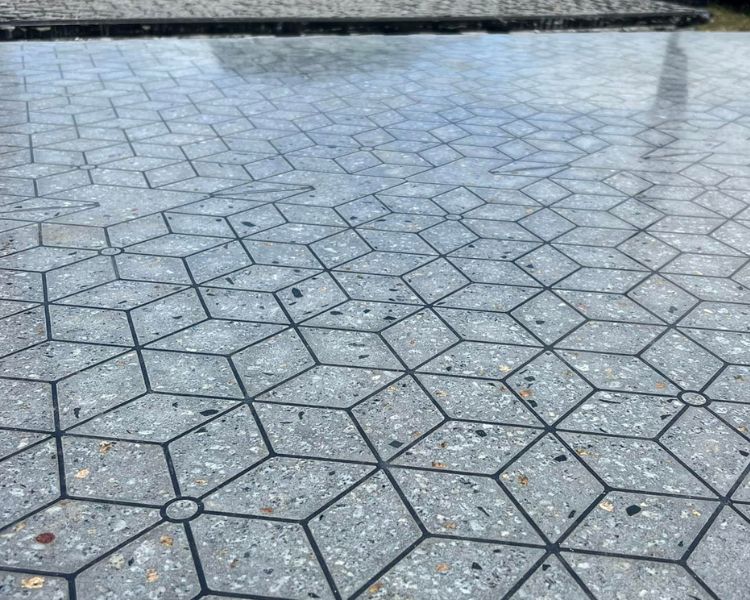
Rombus is not poured as one rigid slab.
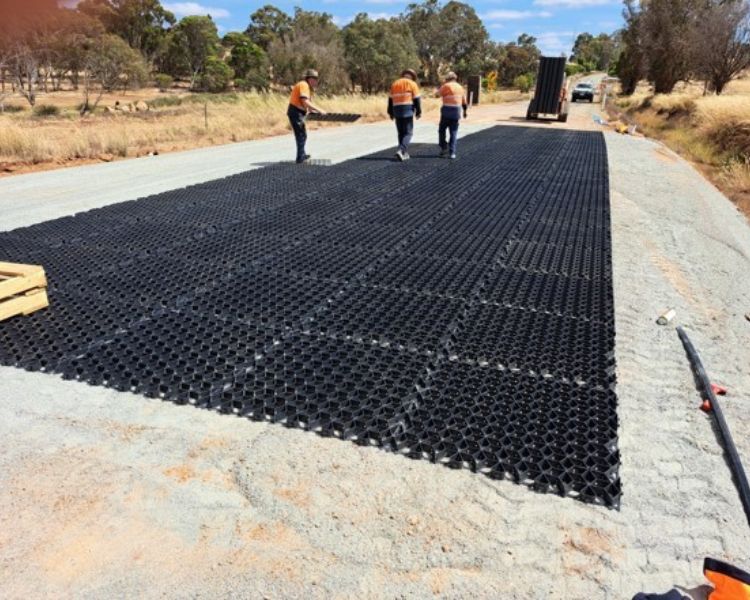
It is a modular flexible concrete pavement system.
Each panel is one metre by one metre and forty millimetres thick, made from ninety six percent recycled polypropylene. Once installed, the grid is filled with a thirty two MPa concrete mix to create a high strength surface.
The difference is not the concrete itself.
The difference is how the concrete is supported.
Because the system is modular, load and stress are spread across the grid instead of concentrating in one rigid mass. This allows the surface to handle heat, shrinkage, and minor ground movement without cracking in the way traditional slabs do.
Why This Matters in Australian Conditions
Australia presents some of the toughest conditions for concrete in the world.
High summer temperatures, large day to night temperature swings, reactive soils, and heavy vehicle loads all place stress on rigid pavements.
Rombus was developed specifically to perform in these conditions:
- Lower thermal mass reduces heat related stress
- Modular design prevents long crack paths
- Flexible structure works with the ground, not against it
- High load capacity supports residential, commercial, and industrial use
When filled, the system has been tested beyond ten thousand tonnes per square metre of load capacity.
Less Concrete. More Performance.
Traditional slabs often require one hundred to one hundred and fifty millimetres of concrete thickness to achieve strength.
Rombus achieves comparable performance with a forty millimetre profile by using structural design rather than mass. This reduces:
- Concrete volume
- Installation time
- Carbon impact
- Repair costs
It also allows damaged sections to be replaced individually instead of breaking out entire slabs.
Where Rombus Is Being Used Across Australia
Rombus is suitable for:
- Driveways and residential hardstands
- Shed slabs and workshops
- Commercial yards and access ways
- Industrial and heavy duty pavements
- Infrastructure and expansion projects
Because it can be installed over prepared ground or structurally sound existing concrete, it is also widely used for upgrades and extensions where demolition is costly.
The Future of Concrete in Australia
Concrete is not going away.
But the way it is used is evolving.
Rigid slabs will always have a place, but flexible concrete pavement systems are becoming the preferred solution where heat, movement, and durability matter.
Rombus represents the next step in Australian concrete design.
Not by replacing concrete, but by making it perform better.